URBAN PLANNING PROJECT - A New Centrality in Rabat, Morocco

Kenza Kettani
student
Université international de rabat UIR
Morocco
Urban Design and Landscape
The project idea aimed to conceptualize the development as a new centrality within the city of Rabat. The site offers a distinctive chance to establish a… more
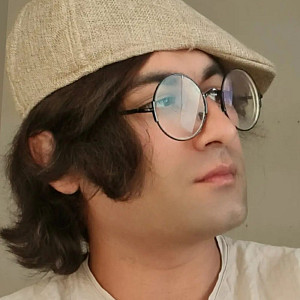
Esmaeil GHASEMZADEH
advisor
Islamic Republic of Iran
My architecture begins in silence — in listening to the ground before drawing a line.I do not seek… more
The project presents a strong ambition to redefine the site as a new urban centrality through a fluid relationship between architecture and landscape. The overall masterplan demonstrates a clear attempt to create a continuous pedestrian experience, with the central esplanade acting as a unifying civic space around which different programmatic clusters—entertainment, sports, residential, administrative, and cultural—are organized.The use of organic geometries across footprints, façades, and landscape elements creates a distinctive visual identity, and the project succeeds in establishing a coherent formal language. However, the formal strategy would benefit from a deeper alignment with functional and climatic logic. Several curved volumes remain primarily aesthetic gestures rather than performance-driven forms, and some building typologies would require further examination to ensure efficient internal layouts, appropriate daylighting, and thermal comfort.Material selection is another important point. The extensive use of wood creates a warm and contemporary atmosphere, but in the context of Rabat’s humid, sun-exposed climate, natural wood at this scale raises concerns regarding durability and long-term maintenance. A more regionally grounded material palette—stone, engineered wood, GRC panels, or anodized aluminum—could reinforce both identity and technical feasibility.Despite these points, the project demonstrates thoughtful spatial continuity and strong landscape–architecture integration. With further refinement of the urban hierarchy, material strategy, and functional justification of the organic forms, the proposal has the potential to evolve into a robust and contextually grounded urban intervention.
My advice is to focus on three key areas:
Enhance the functional logic behind the organic forms.
Clarifying how the curved footprints improve circulation, microclimate, daylighting, or program efficiency will make the formal language more grounded and purposeful.
Revisit the material strategy in relation to Rabat’s climate.
Consider replacing large-scale natural wood with more durable and local alternatives—such as Moroccan stone, GRC, engineered timber, or anodized aluminum—to ensure long-term performance and reduce maintenance demands.
Strengthen the urban hierarchy and mobility structure.
A clearer sequence of pedestrian access, shading zones, and connections to adjacent districts will significantly improve the legibility and usability of the public esplanade and surrounding clusters.
These refinements will help elevate a visually strong proposal into a more technically resilient and context-responsive urban project.
01.12.2025

Copyright © 2026 INSPIRELI | All rights reserved. Use of this website signifies your agreement to the Terms of Use, Privacy Policy, and use of cookies.
